Pillar · The engine: what Contee does

Automation

Scaling the production of quality software, through the progressive automation of part of the complexity of reasoning.

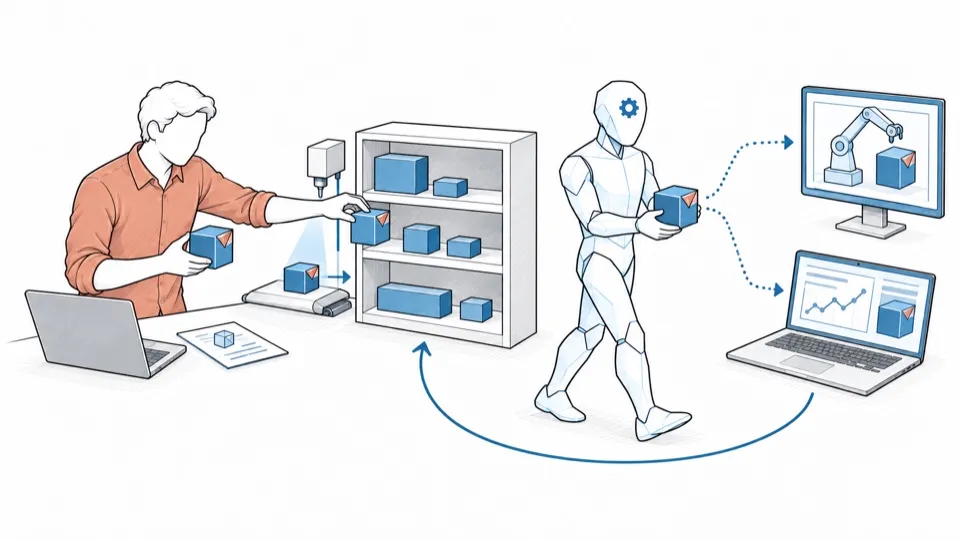
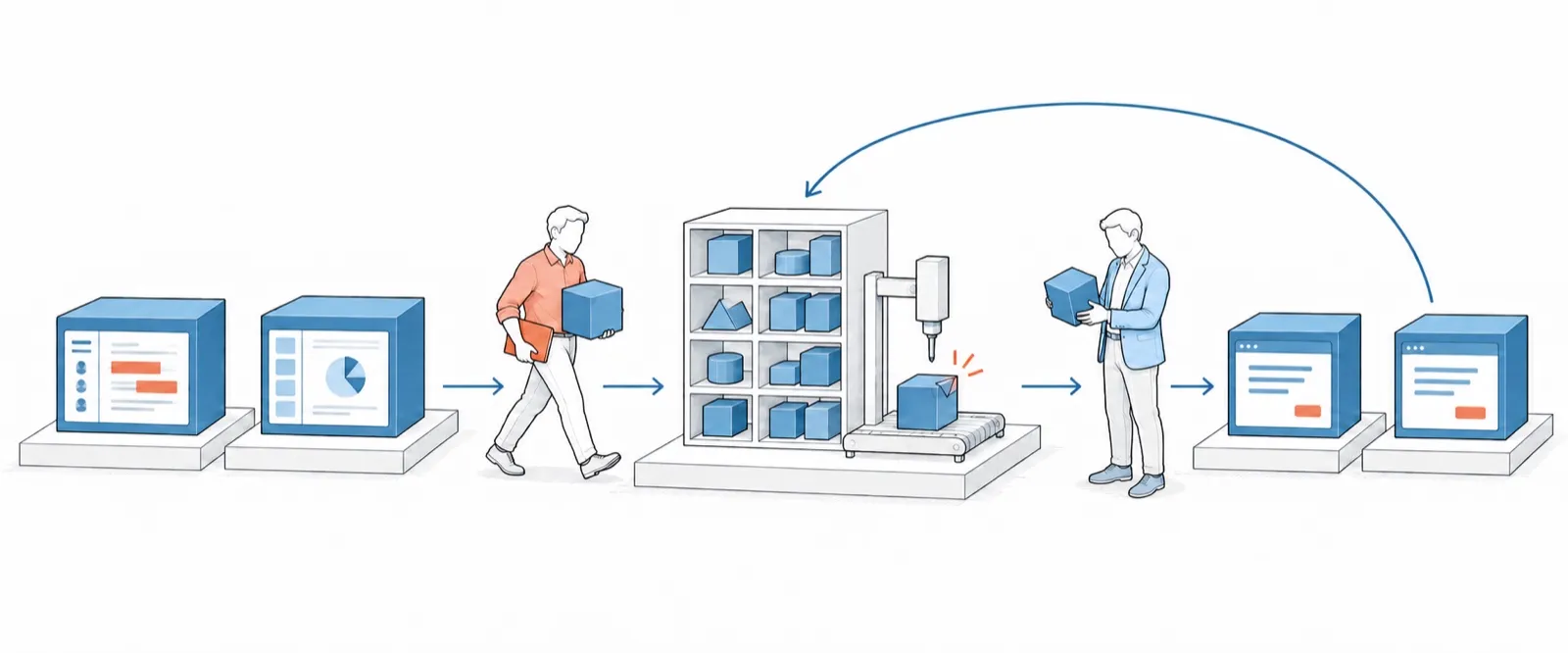
A production line: applications come out of a workshop of bricks, and each one returns to enrich the stock that will serve the next.

The situation first

A situation is read before it is automated: quantitative and qualitative constraints, capabilities available at different costs, projections for what comes next.

That situation breaks down, and each piece calls for its own form: generative AI where interpretation and variation are needed; a learned model where repeated data makes prediction possible; code where the rule is stable; a process where several people must coordinate; a human decision where judgement cannot be delegated.

The question becomes: which form, or which composition of forms, does this work best, here, at this cost? The answer changes with the constraints and with the capabilities available: Contee keeps shifting the distribution, its own products included.

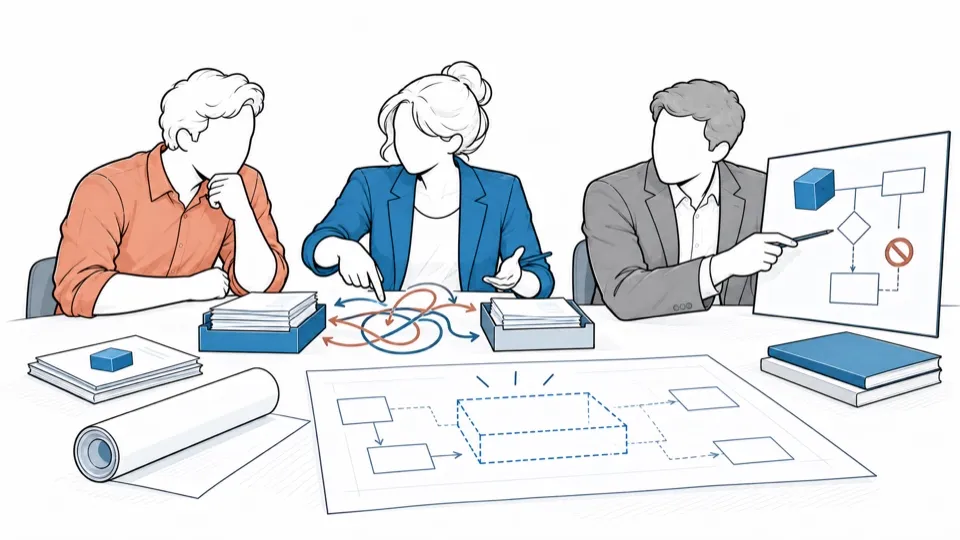
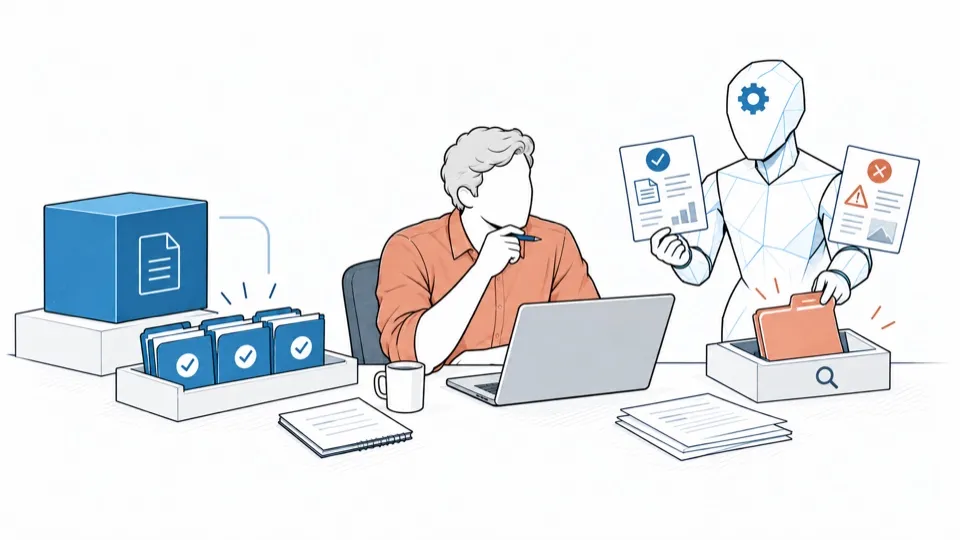
Three people untangle intertwined flows between two piles of files; one points to a diagram, and the plan of the future brick is still dotted.
Understanding the situation before automating.

One sentence, three disciplines

In “the progressive automation of part of the complexity of reasoning”, every word commits.

Progressive

Automation advances in layers, each layer proven before the next.

Part of

The honest scope: the human keeps the judgement, the AI stays bounded.

Reasoning

A service contract encodes a security reasoning, an automated check an audit reasoning, a diagnostic grid becomes an executable function.

Bounded, by construction

A trustworthy automation knows what it does, when to hand over, and how it is monitored.

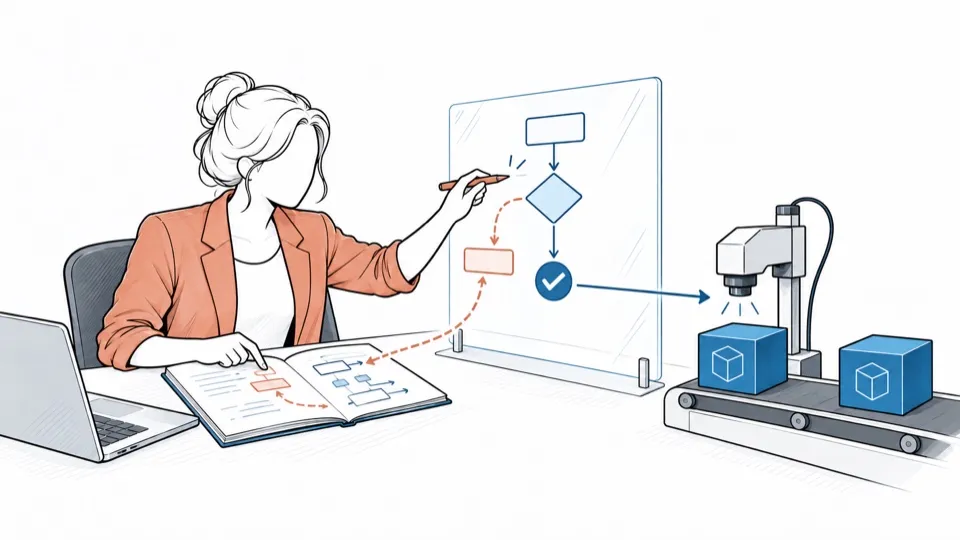
A person draws a flowchart on a glass pane; behind it, a machine applies it to the bricks going by.
Reasoning becomes executable.Part of the reasoning is automated, with its conditions; rules and exceptions get validated.
Folders sort themselves; an AI assistant submits the doubtful case to a person.
The automation knows when to hand over.Autonomy includes the ability to ask for a decision, by defined criteria.
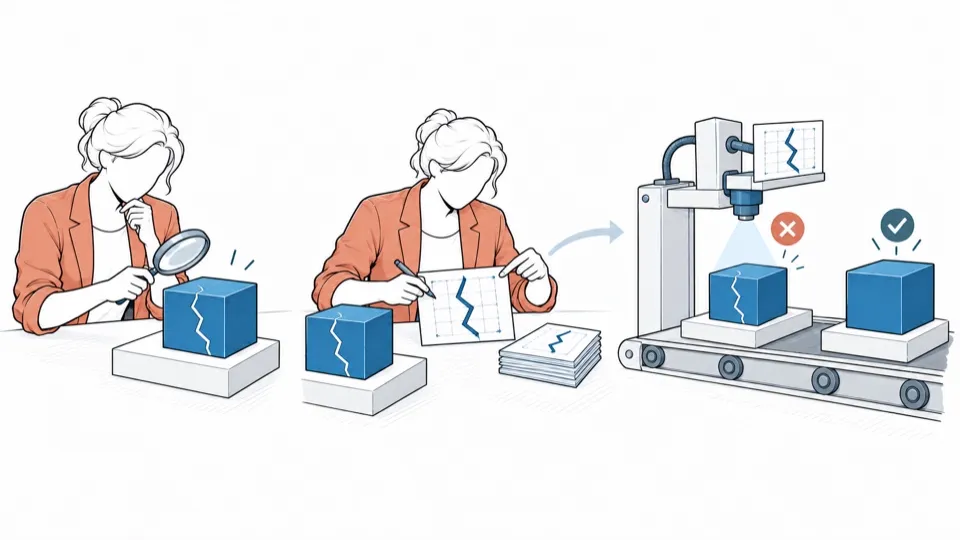
A person examines a cracked brick through a magnifying glass; the defect becomes a test on the production line.
Every error leaves a test.Every problem understood becomes one more check.
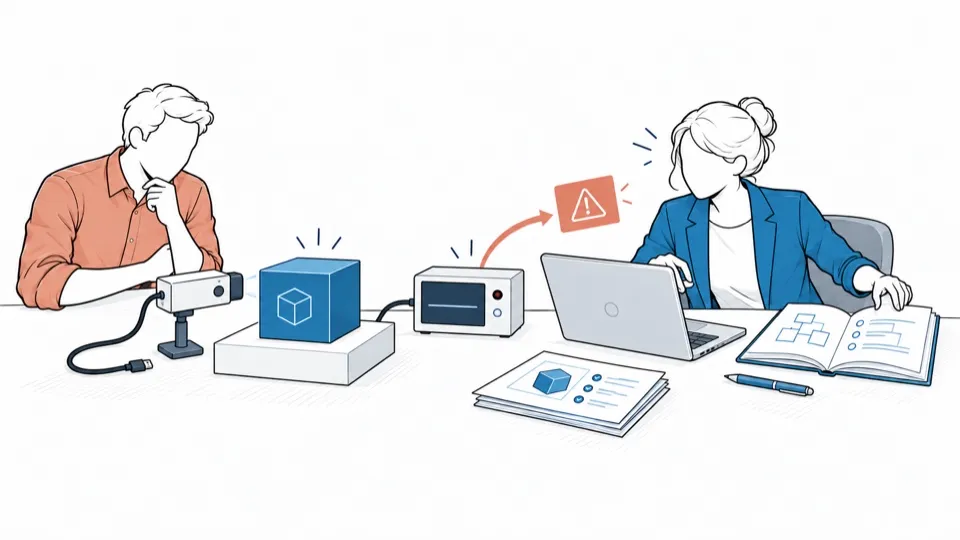
A control box raises an alert that a person receives at their desk.
The automation is monitored too.A silent check may have stopped working: it is monitored in turn.

AI adapts, determinism guarantees

Every step couples the AI's ability to adapt with the determinism that frames it.

AI understands the need, generates, adjusts. Determinism frames and guarantees: continuous integration, the Rust language, service contracts, automated checks.

When the agent proposes, the compiler answers with precise feedback: the error shows before going to production.

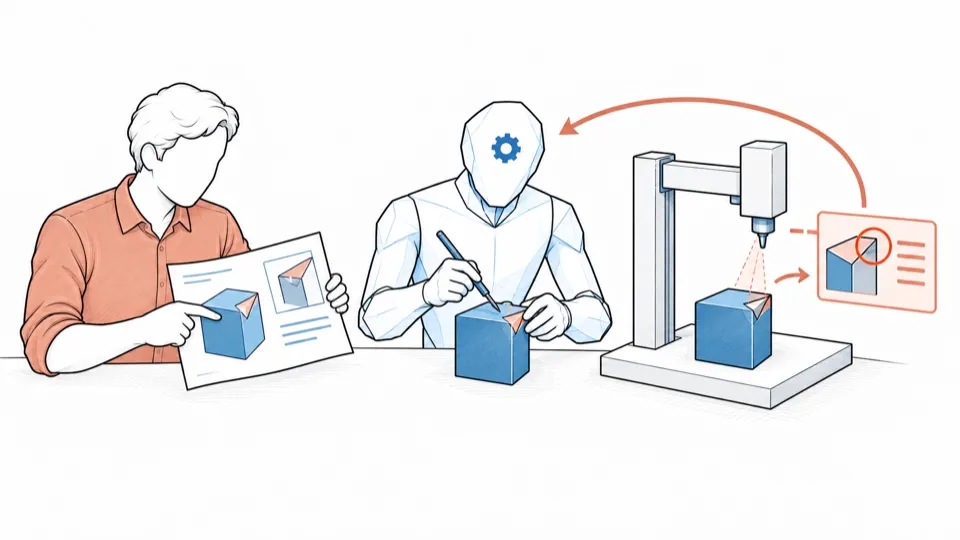
A person and an AI assistant work together; a machine sends them back a precise correction.
The agent proposes; the compiler answers with precise feedback.

Reusing from one project to the next

The 3D printer for the rare, the mould for the repeated.

Reuse what is proven.

What Contee avoids

Three people, each at their own desk, remake the same bricks among crumpled drafts.
On every project, the same functions get rebuilt.

What Contee does

A person shelves a validated brick in a library where an AI assistant picks it up again for new applications.
Every capability acquired prepares the next productions.

Every automation prepares the next

A capability produced can serve a client, and enrich the line that will produce the next ones.

Code generated on the fly will matter — all the more as it can rely on a stock of solid capabilities, whose verification reruns on every change. Contee builds that stock: flexibility on top of an industrial base.

It is a building strategy: every level is paid for once, and reuse is chosen and maintained. A cumulative acceleration sought, and measured.
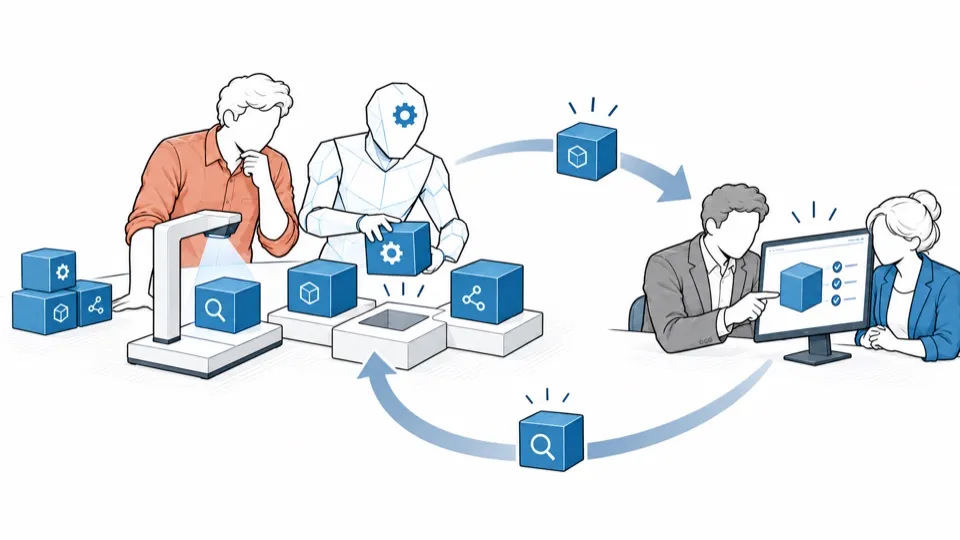
A loop: the bricks produced for one client come back to feed the workshop that will serve the next.
Producing a solution and enriching the means for the next.

Automation that belongs to you

Contee's automation is delivered with the keys: the code, the contracts, the operating procedures, the reversibility.

An automation creates dependence as soon as you can no longer read it, run it yourself or leave it. This one can be read, run and left: it gives time back to people, under your control.

Contee applies it to itself first: its own deliveries go through the same checks, with no privileged path.

What automation does not promise

Bounded, proven, progressive: its limits are part of the promise.

  • Never “total automation”: judgement stays human, and the criteria for handing over are defined with you.
  • A test covers an identified case; it does not guarantee the absence of new defects.
  • Not every production becomes a tool: reuse is chosen, validated and maintained.
  • Cumulative acceleration shows in the measurement, project after project.

A reasoning that keeps coming back, or an automation you want to run yourself? Let's talk.