Pillar · The purpose: what for

Cooperation

Working together while remaining sovereign parties: each keeps its goals, its interests and its ability to negotiate.

Three people around a table pool an intention, an application and a plan.

Cooperating, collaborating

Two close words, two different contracts.

Collaborating

A common goal, carried together by every party: the form that fits when interests coincide.

Cooperating

Different goals, and parties who work together while preserving their balance of interests, power and negotiation: the form that fits when interests diverge.

A tradition

The meaning of the sociology of organisations (Crozier and Friedberg, L'Acteur et le système, 1977): each actor keeps their room for manoeuvre, and that is what makes the agreement solid.

A balance to set

Without cooperation, sovereignty turns into autarky; without sovereignty, cooperation turns into dependence.

Cooperating with no imposed checkpoint.

What Contee avoids
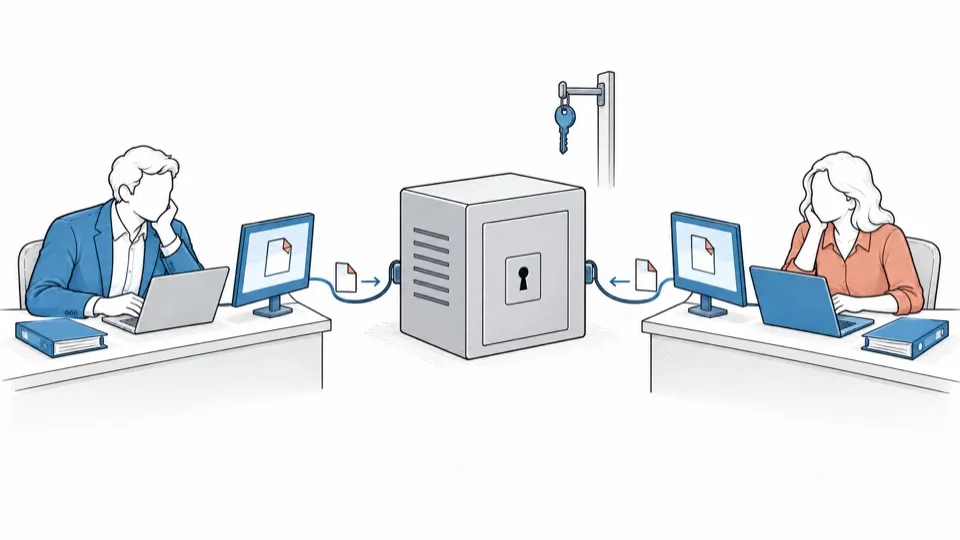
Two people can only exchange through a central safe under lock and key.
Cooperating can turn into depending on an imposed checkpoint.

What Contee does

Two people pass a brick through a shared connector; each keeps their data and their keys.
Cooperating while keeping control of one's own means.

Cooperating, in practice

Different constraints, examined disagreements, acknowledged contributions.
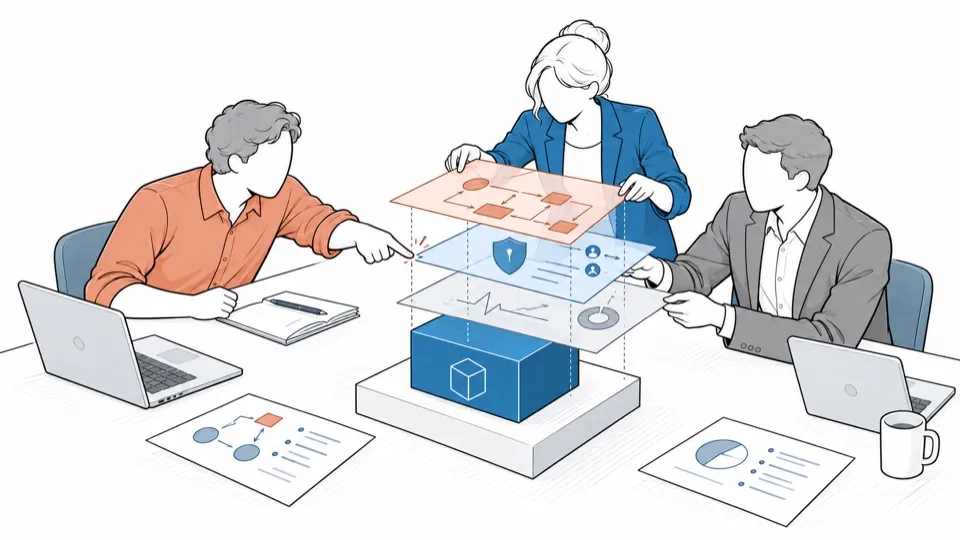
Three people layer their constraints, like tracing sheets, above the same brick.
Same project, different constraints.Each keeps its own goals.
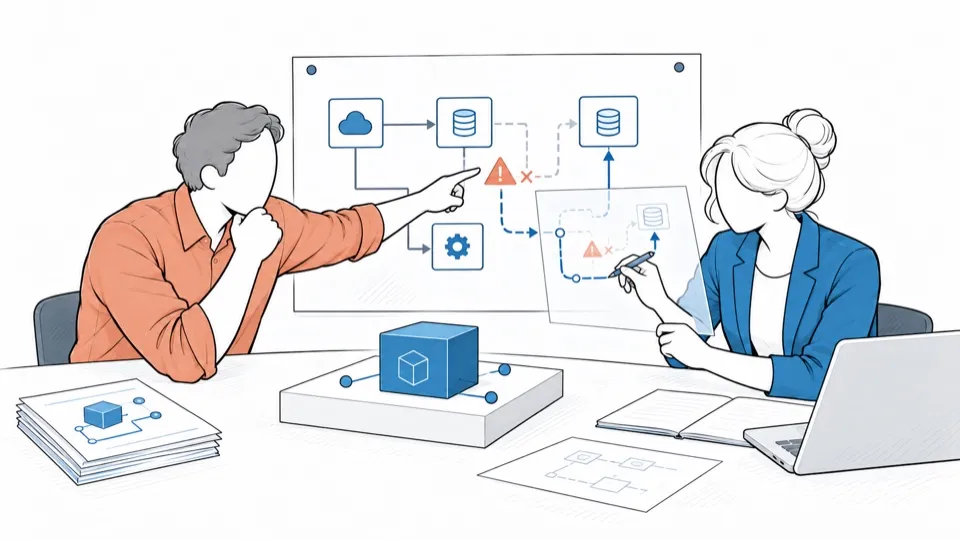
A person points out a risk on the diagram another has drawn.
Disagreement makes the project better.Once examined, an objection becomes a contribution.
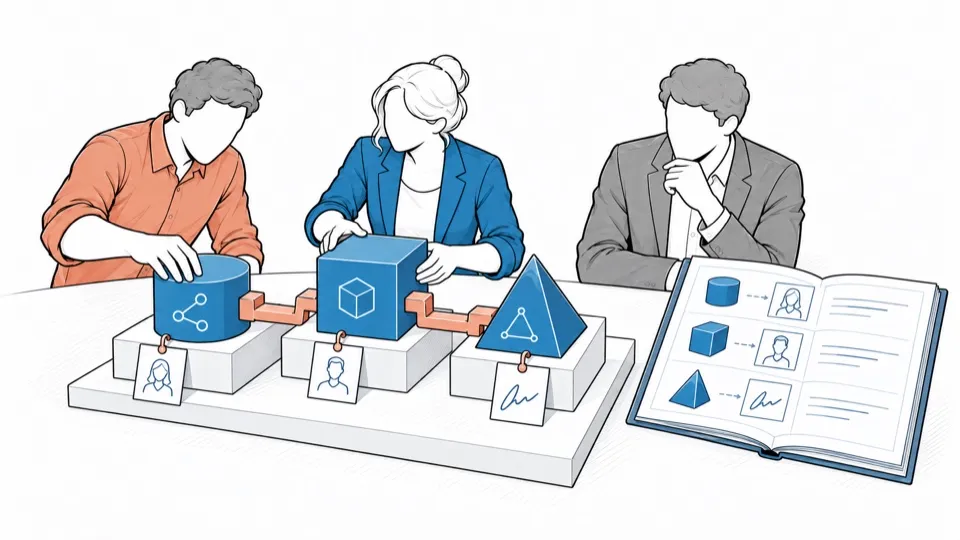
Three people assemble pieces labelled with their origin; a register lists them.
Assembling without erasing contributions.Loyal recomposition acknowledges where each piece comes from.

At both ends of the chain

Mid-size problems are cooperation problems: they cut across silos, and no single department can solve them alone.

Hence the motto: cooperation at the ends, sovereignty at the centre. Upstream, choosing the right problems together (Works); downstream, having the solution adopted by those who will bring it to life (Change) — two products in preparation.

At the centre, producing robustly and deploying on your premises (Walls, Crown), under your control.
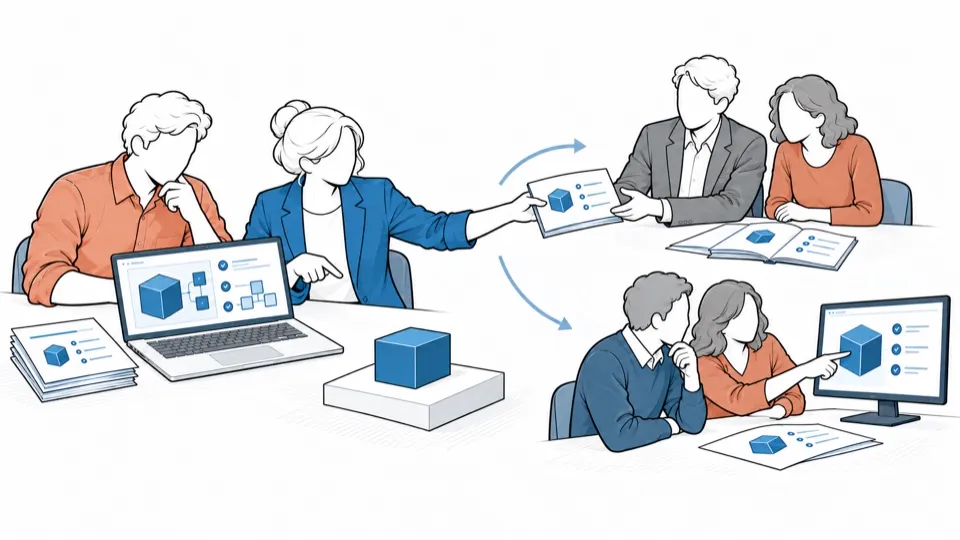
A person hands materials to two pairs of colleagues, who take them up at their desks.
Equipping those who will bring the adoption to life.

Reusing without absorbing

Open-source components are assembled as they are; Contee's value lives in the seams.

Keycloak, Forgejo, Traefik, Podman: each component keeps its name, its licence and its project. A documented fix can go back to the project it came from.

Coming back by choice

The loyalty sought comes from renewed usefulness.

Cooperating by choice, without capturing.

What Contee avoids

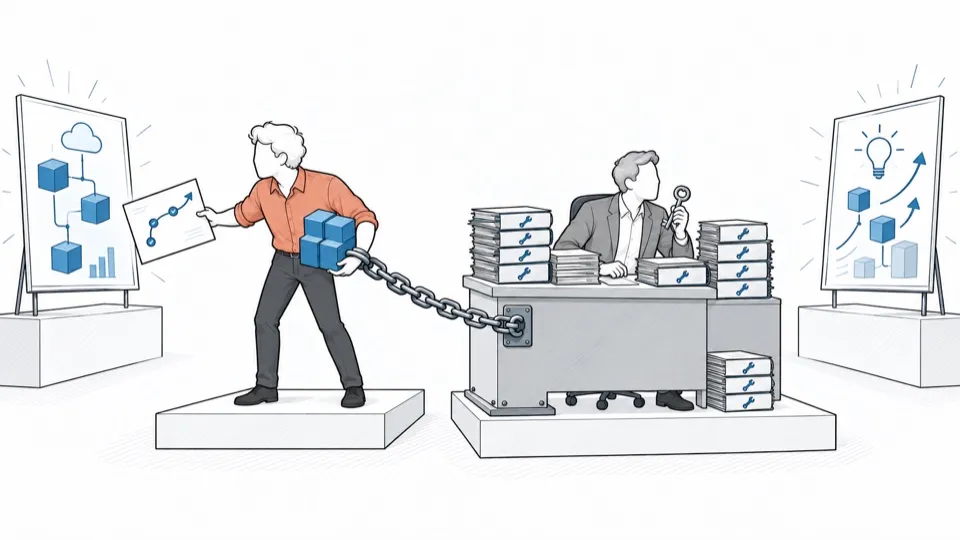
A person, chained to a desk loaded with archives, cannot join the projects around them.
Not holding the relationship through dependence.

What Contee does

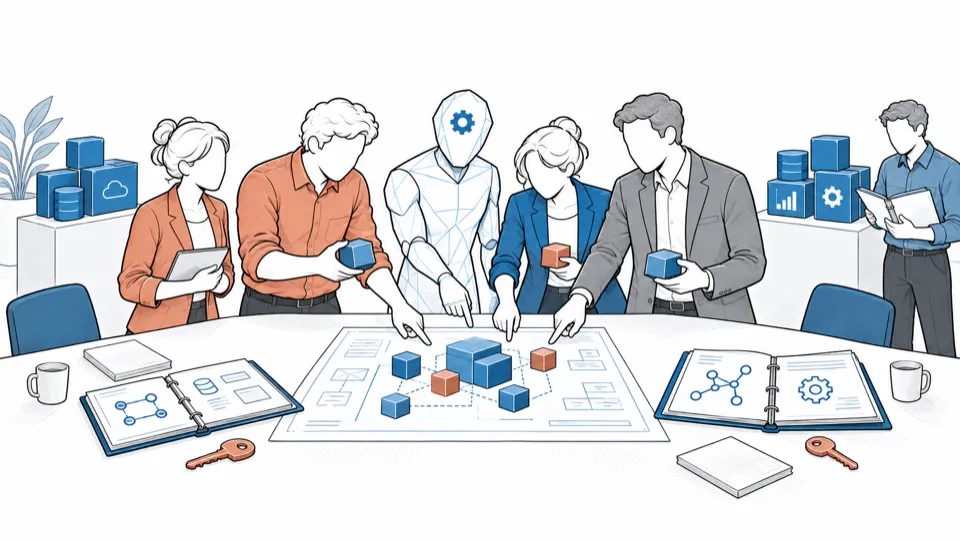
A large team leans over a shared plan, each with their bricks and their keys.
Coming back for what is left to create together.

What cooperation does not promise

Cooperating erases neither interests nor trade-offs.

  • A picture of agreement does not replace the trade-offs over responsibilities and means.
  • Disagreement is useful when it is examined; no automatic consensus is promised.
  • Everyone keeps their goals and can decide not to start a new project — Contee included.
  • Software and materials replace neither leadership nor negotiation.

A problem that cuts across several teams, and that no one can solve alone? Let's talk.