Pillar · The frame: under which conditions

Sovereignty

The ability to choose one's ties, and to leave them. The test: can you leave without collapsing?

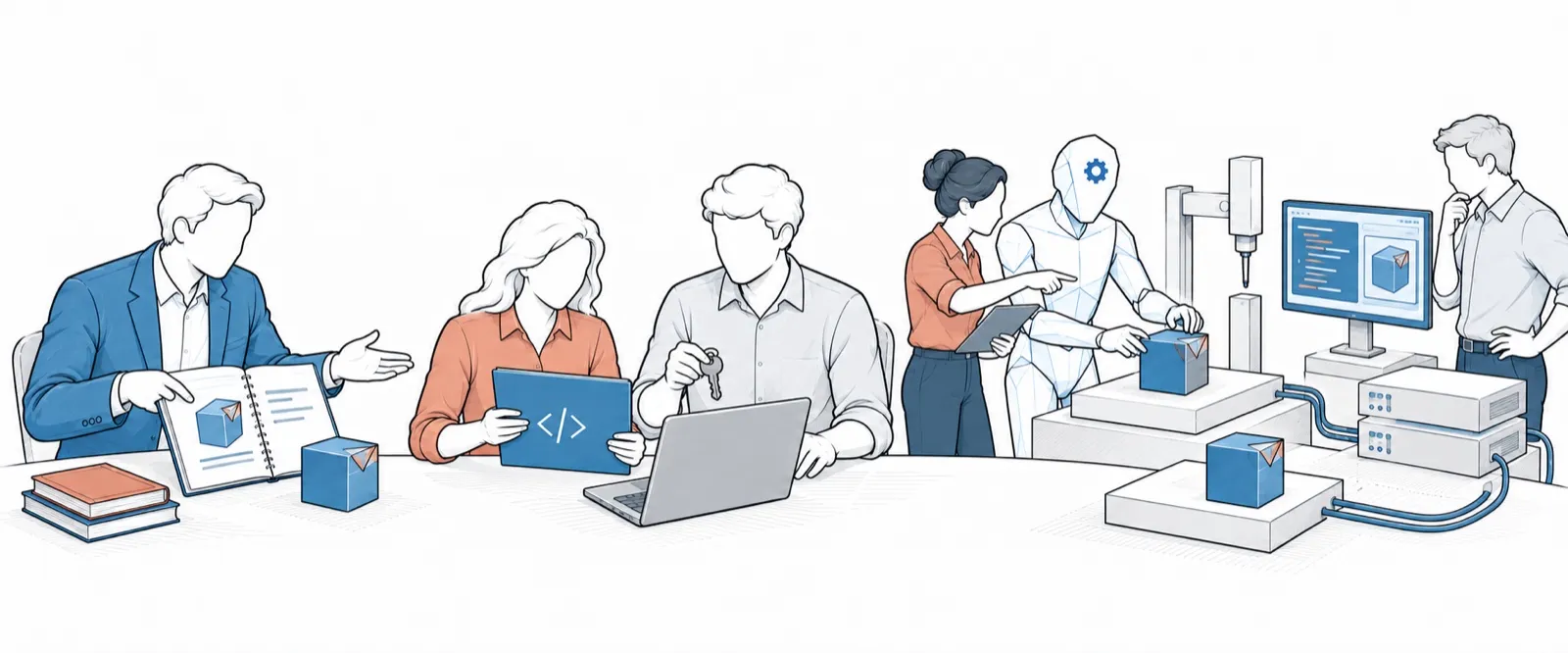
Teams work with the bricks, documents and tools they received: the publisher also delivered the means to carry on without it.

The exit test, Contee included

The exit test applies to every supplier, Contee first.

Dependence shrinks through an exit capability that has been exercised. The code, the documentation, the configurations and the skills stay with you: you can leave without rebuilding everything.

Contee makes you able to leave, including Contee itself, and leaves you the choice to stay. The European Union says the same thing with one adjective: an “open” strategic autonomy, calling for more cooperation.

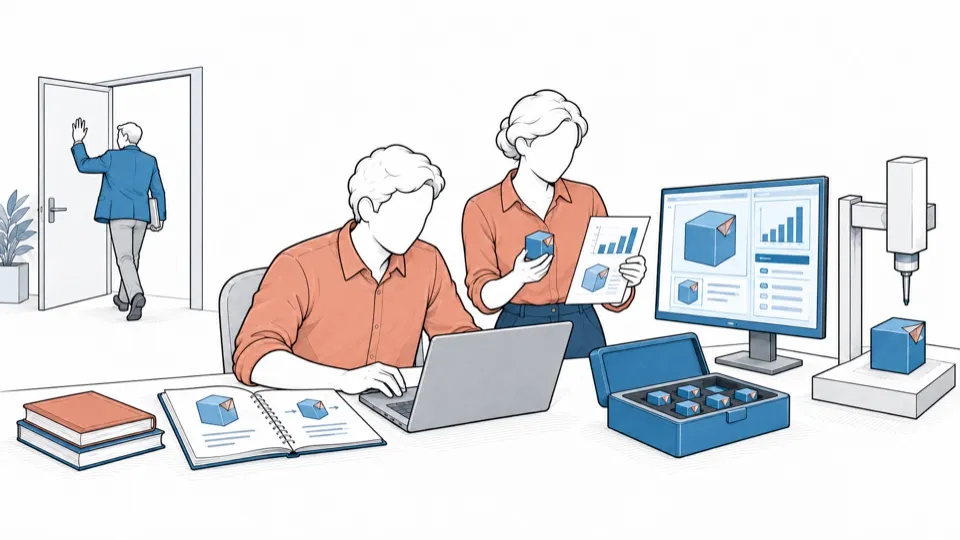
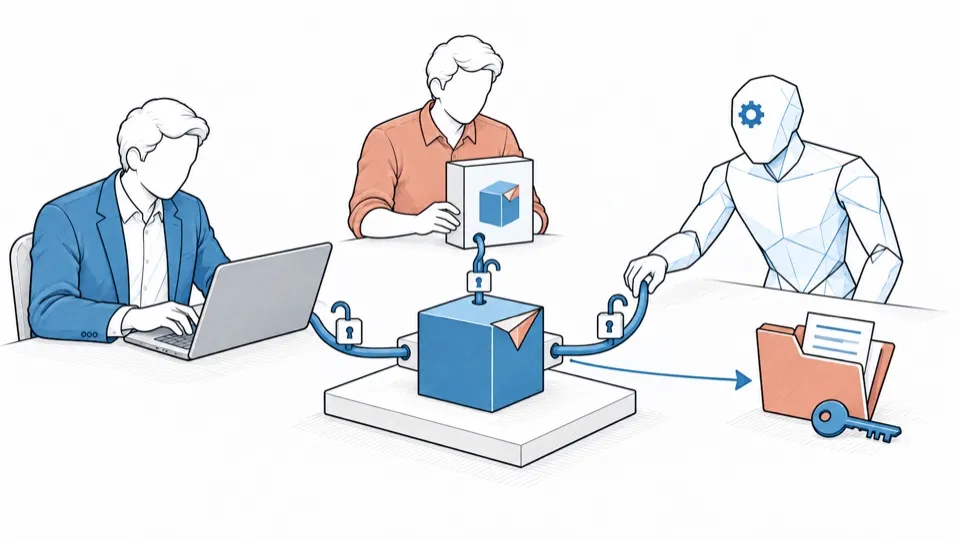
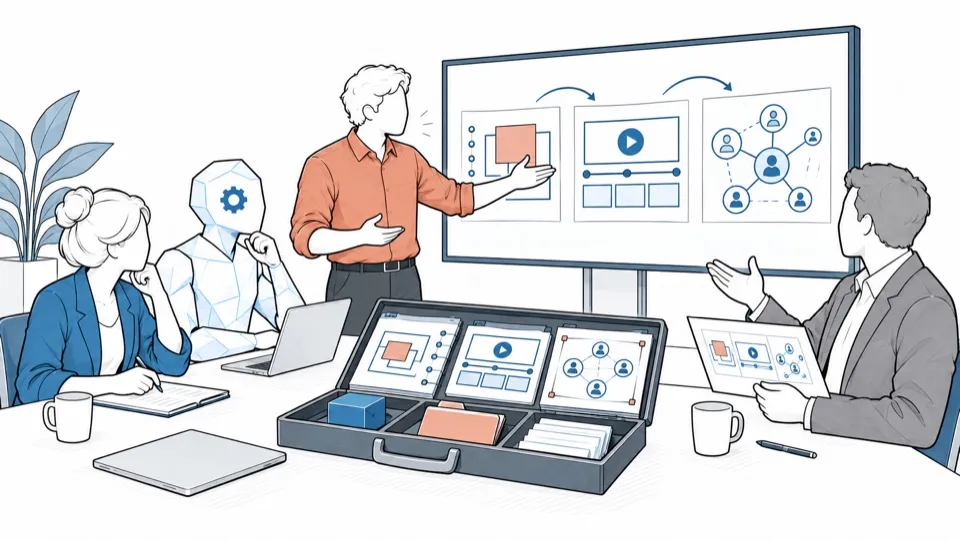
Two people keep working with their tools and bricks while a third leaves the room.
The partner can leave; your capability stays.

Sovereign over what?

Sovereignty is checked domain by domain.

Software production, data, the application estate, security, hosting — and the brand: deploying, integrating and selling one's products under one's own identity. Each is a domain of control to demonstrate.

Every meaning of the word has its trap. Hosting in France can fall under a foreign jurisdiction over the supplier. French ownership can change hands. Rebuilding the code takes more than reading it. Autonomy is demonstrated in practice, after the training.

Hence the rule: “sovereign” always takes a complement. Sovereign over what, and proven how: by a demonstration.

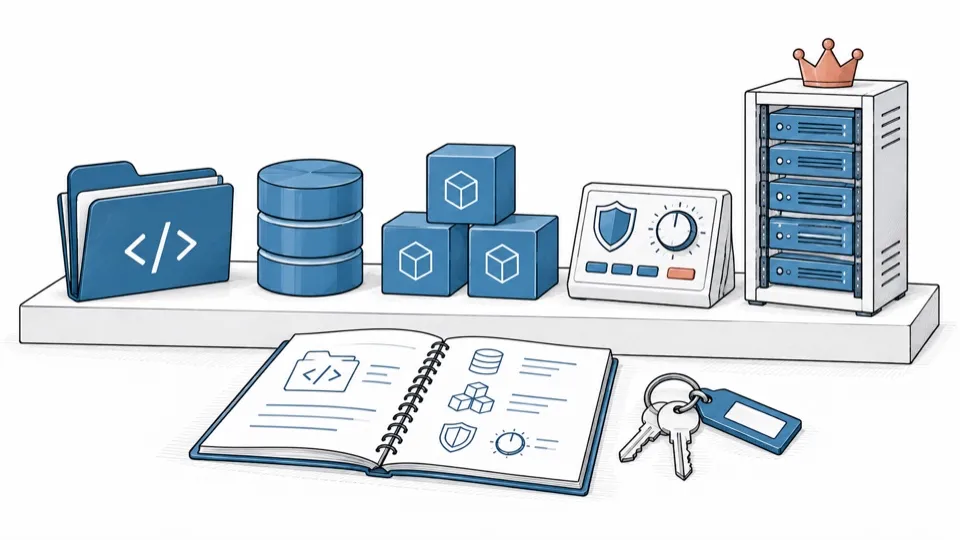
On a shelf: a code folder, a database, bricks, a security panel and a crowned server rack; in front, a notebook and keys.
You keep control over the five dimensions of the software.

Not sovereign, sovereign

Type by type, the same question in two pictures: on the left dependence, on the right sovereignty — the kind Contee delivers. The scenes show acts; none targets a supplier.

Exit

You can leave.

Not sovereign
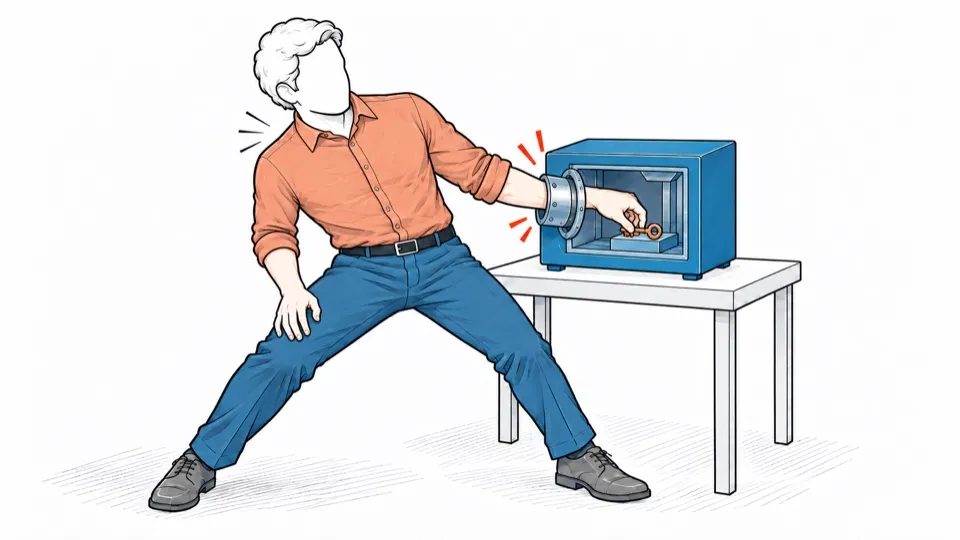
A person pulls with all their strength on their wrist, caught in a box where they tried to take back their key.
Getting in was easy; getting out no longer is.

Sovereign

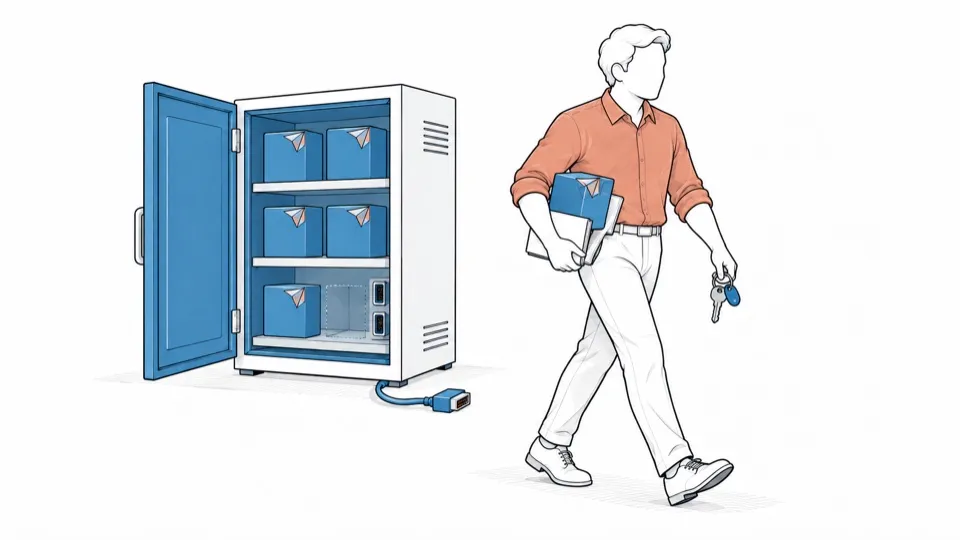
A person walks away, bricks under one arm and key in hand, leaving the cabinet open.
Choosing a tool must leave the option to leave.

Ways of working

You keep your ways of working.

Not sovereign

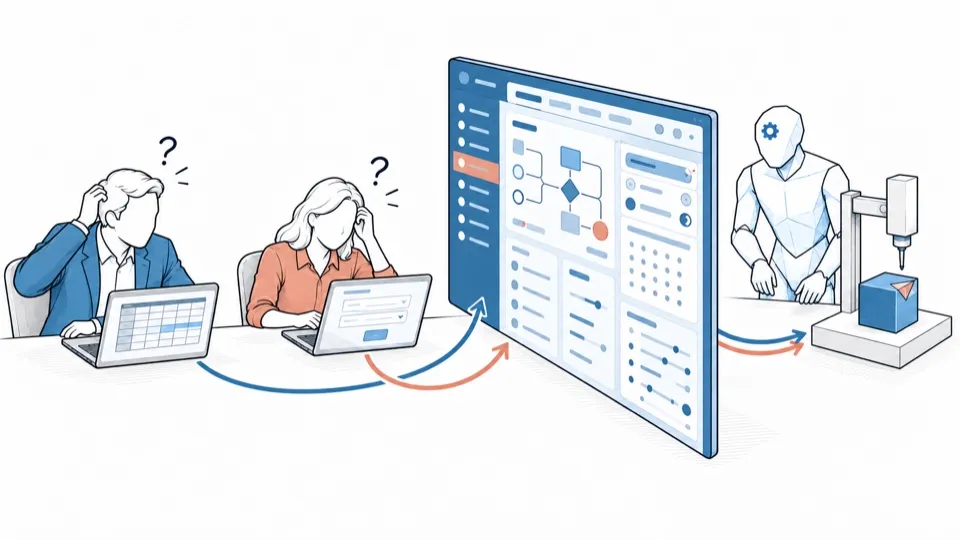
A large interface stands between two puzzled people and the function they want to use.
A useful function should not impose every way of working.

Sovereign

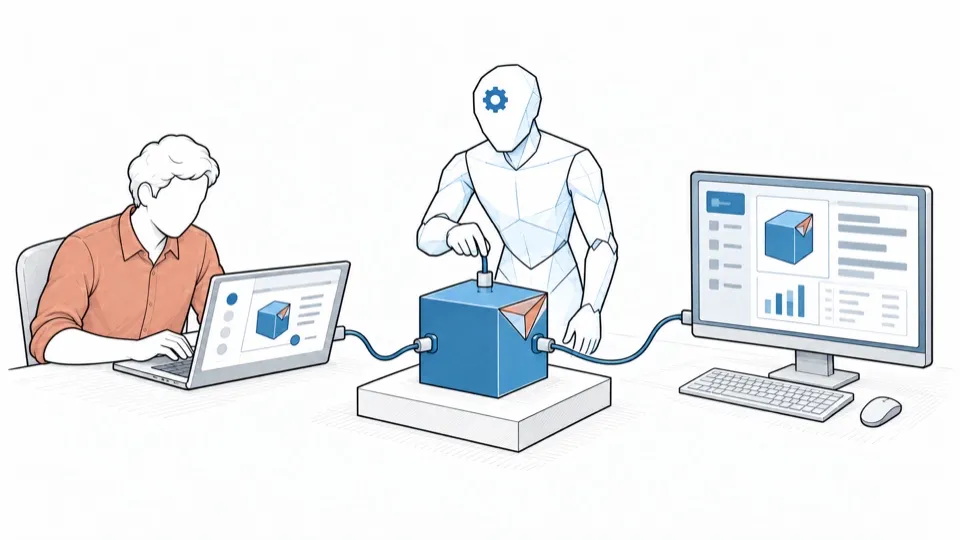
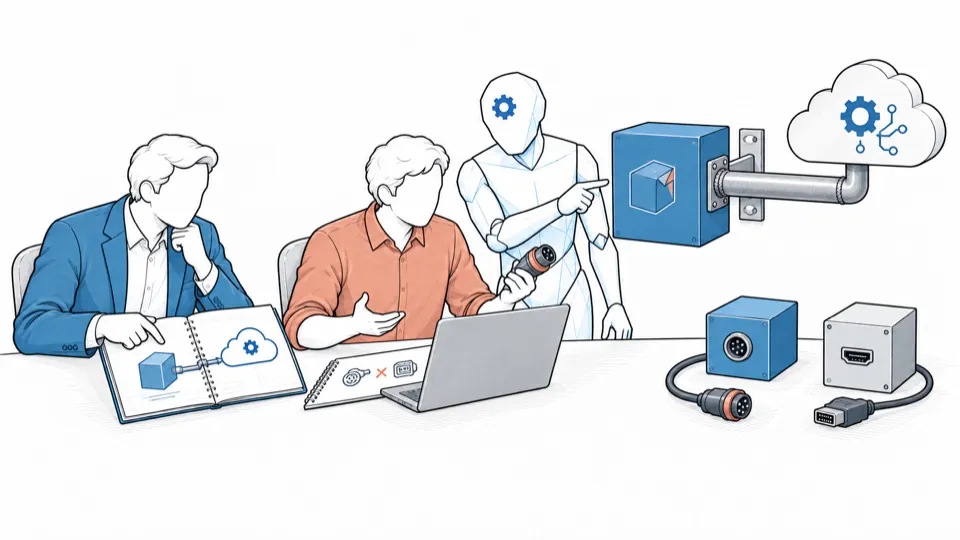
One brick serves a person at their laptop, an AI assistant and an existing workstation.
The same capability fits the existing ways of working.

Access channel

Every access channel is included.

Not sovereign

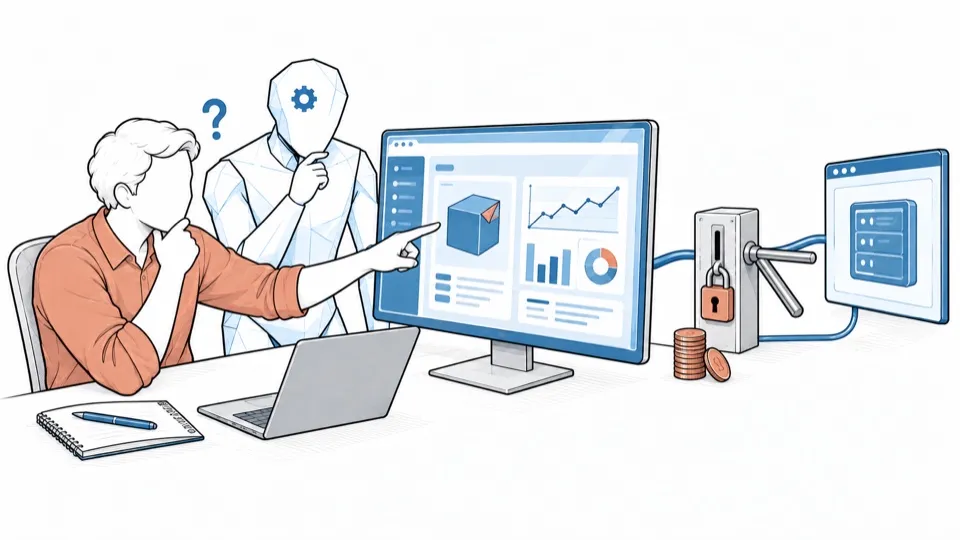
The data can be viewed on screen, but a coin turnstile blocks their automated access.
Reaching one's own data should not unlock an interface surcharge.

Sovereign

One block opens through several controlled accesses, with a shared key and folder.
The choice of interface is included in the licence.

AI

Your AI stays your choice.

Not sovereign

A link welded to a remote service stops the team from plugging in its other connectors.
The supplier should not be welded to the function.

Sovereign

The team connects its brick, as it chooses, to a remote AI, a gateway or an in-house AI.
Choosing the AI that fits the context.

Hosting

You choose your hosting.

Not sovereign

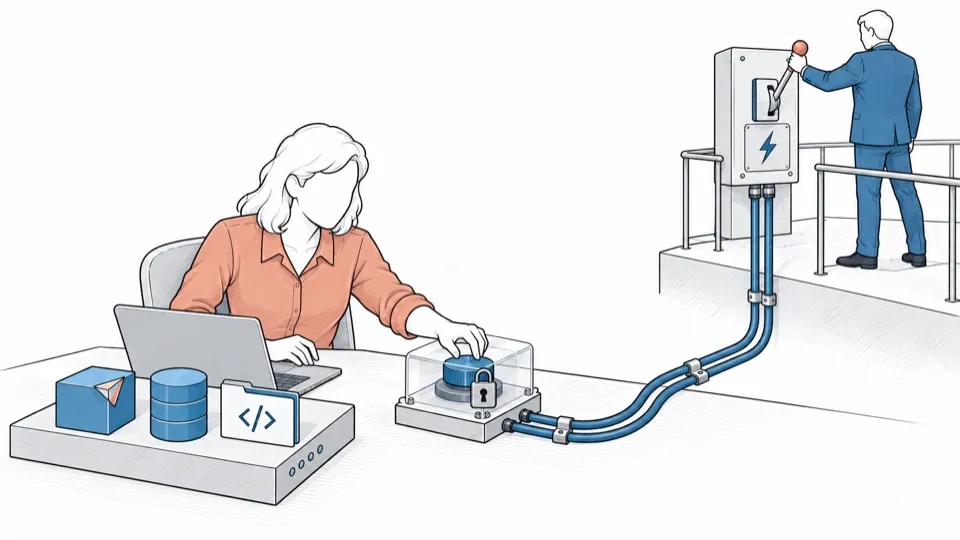
A person works with their bricks; a cable links their desk to a control panel held by someone else, far away.
Your software runs; the controls stay elsewhere.

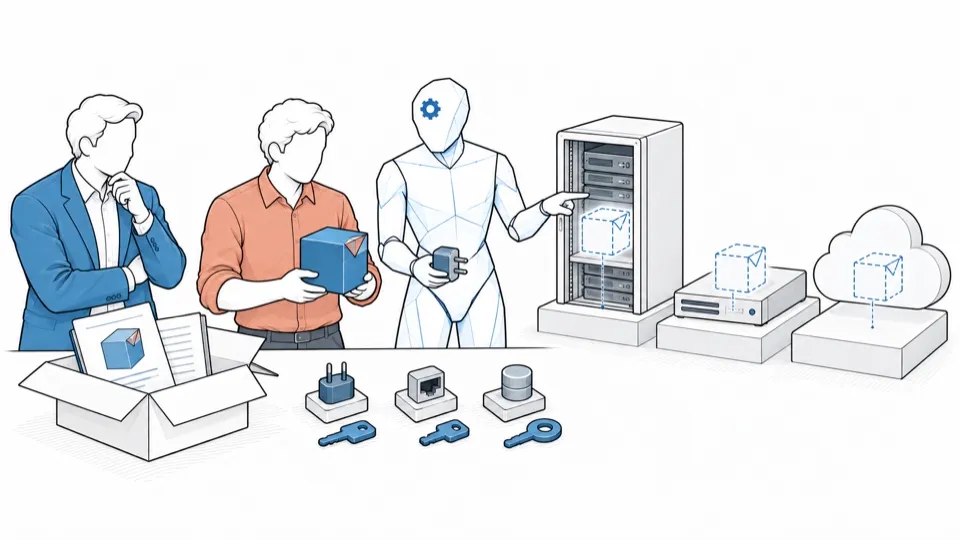
Sovereign

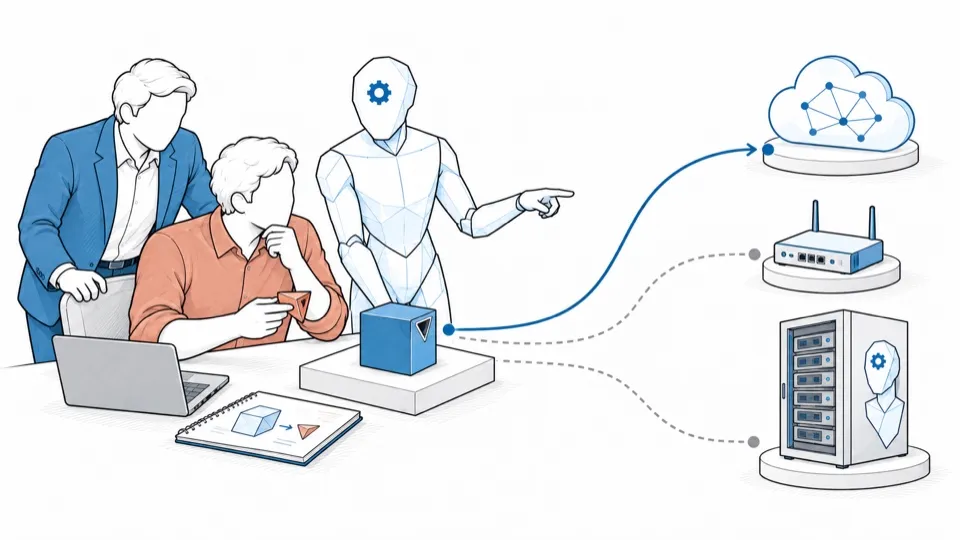
A team holds its brick; an in-house rack, a hosted machine and a cloud are all possible destinations.
Choosing where the brick runs.

Brand

Your products carry your identity.

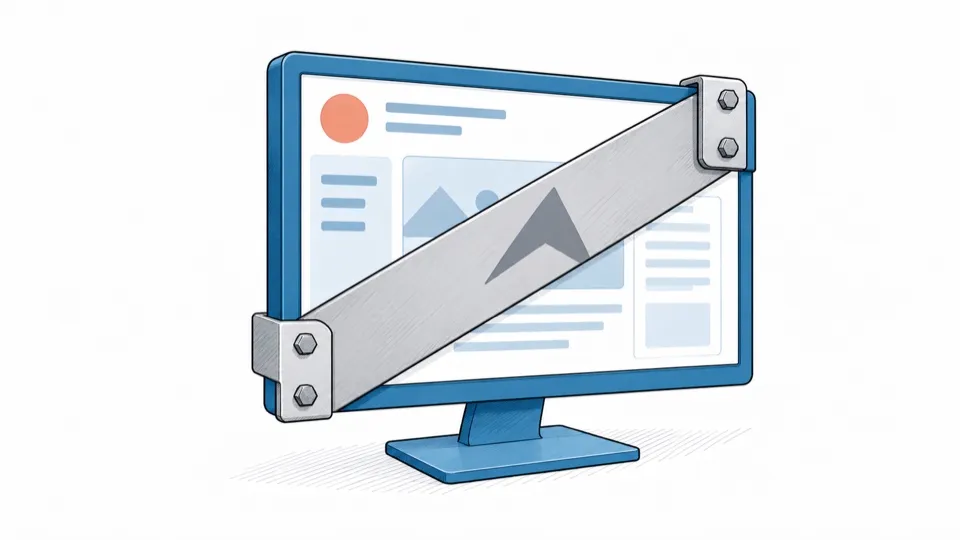
Not sovereign

A metal band bolted across a screen hides the application.
When the supplier's brand takes the place of yours.

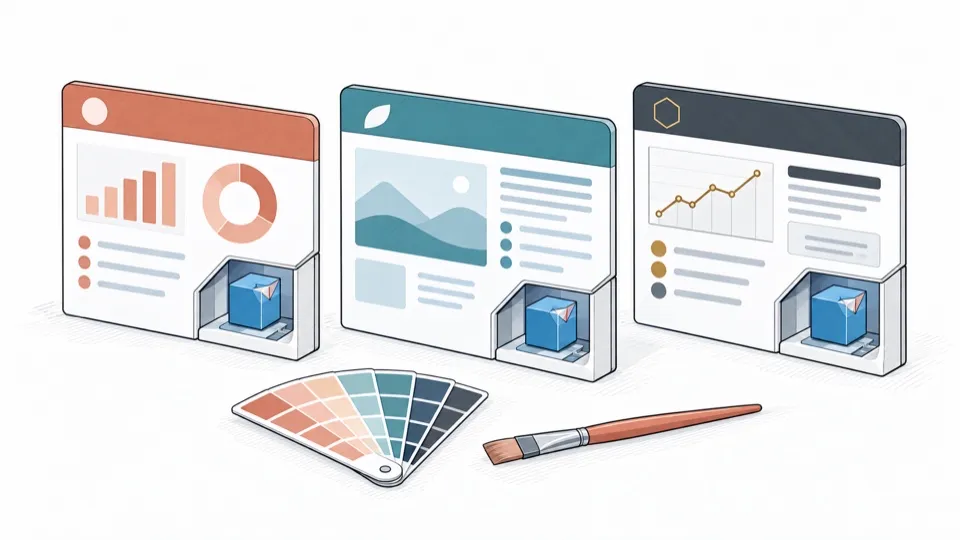
Sovereign

Three applications in different colours, each with its brick, in front of a colour chart and a brush.
Your products carry your identity.

Over time

Your software carries on, even when the contract ends: you keep the versions received, choose which ones you integrate, and your teams know how to keep it alive.

Use over time

You keep the use over time.

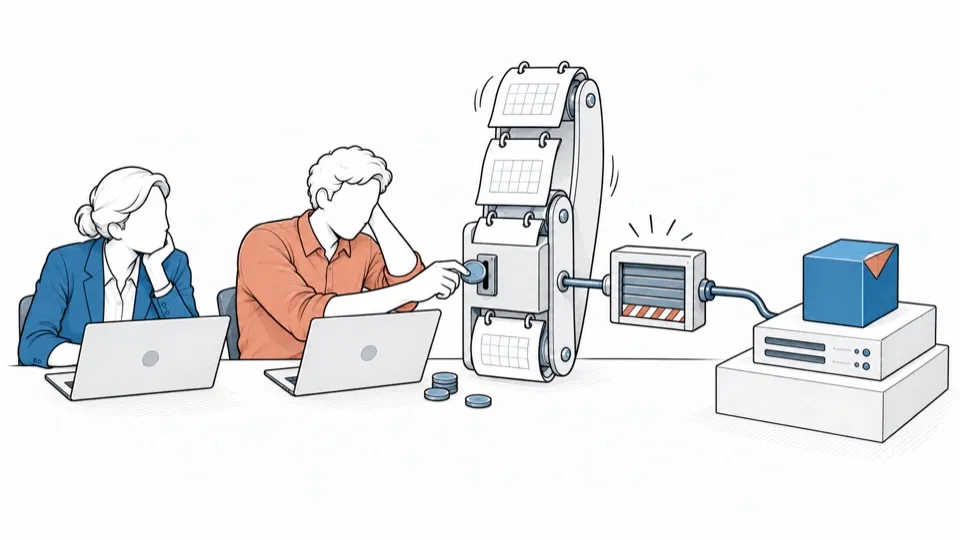
Not sovereign

Two people at their laptops; a coin meter stands between them and their brick.
Use lasts as long as the subscription is paid.

Sovereign

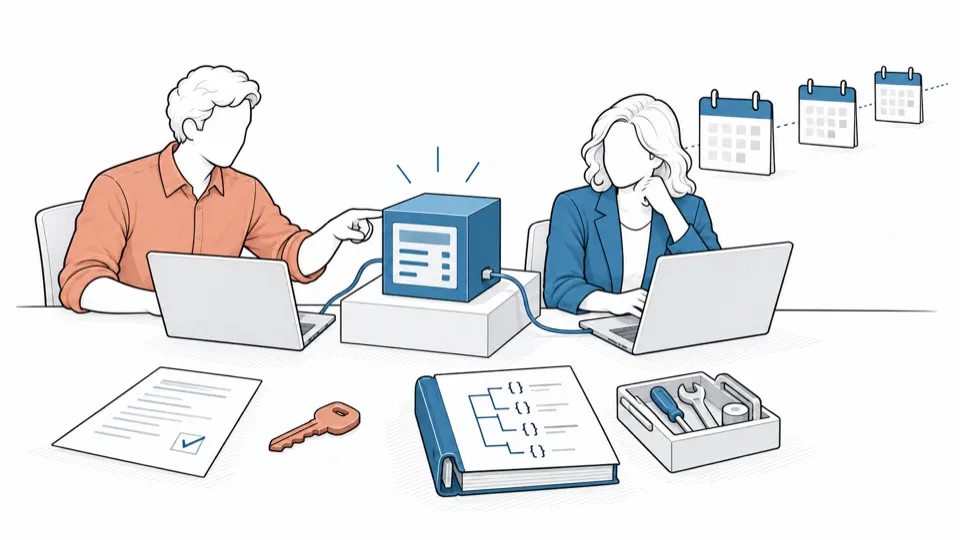
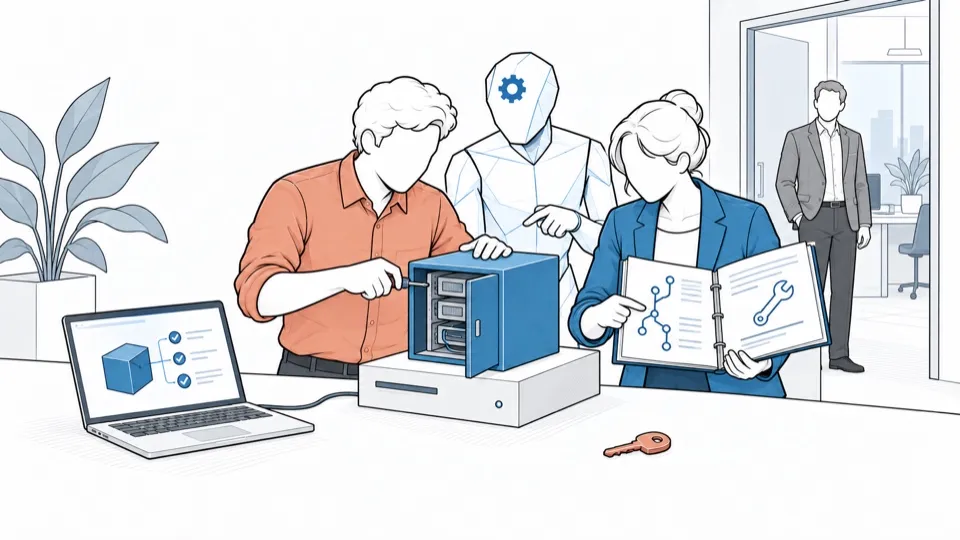
Two people work with their brick; on the table, the contract, the key, the documentation and the tools.
Acquiring the software and keeping its use.

Evolutions

You choose which evolutions to take.

Not sovereign

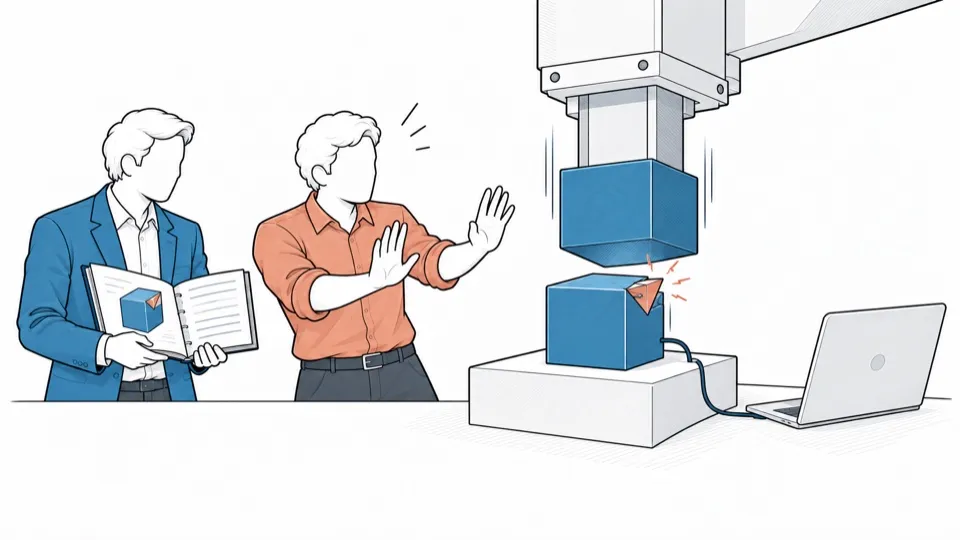
A press crushes a brick the team had adapted, while they try to stop it.
Enduring an evolution that upsets the adaptations.

Sovereign

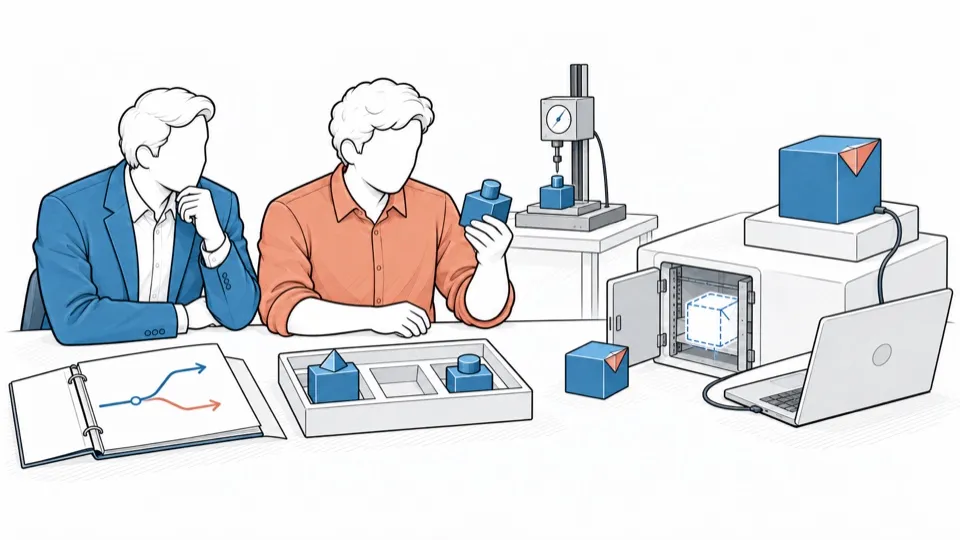
A team examines the new versions received and picks the ones it integrates into its product.
Receiving the evolutions and choosing their integration.

Upkeep

Your teams can maintain their product.

Not sovereign

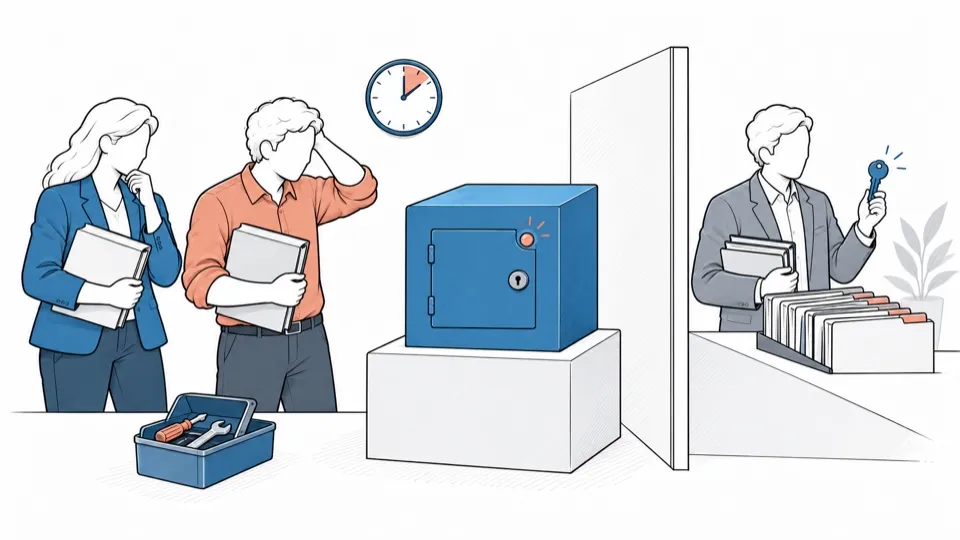
A helpless team in front of a locked safe; behind a partition, only the supplier holds the archives.
Receiving the software without being able to maintain it.

Sovereign

A team opens its machine itself, documentation in hand, with an AI assistant by its side.
Maintaining one's product with the means passed on.

Skills

Your teams know how to act.

Not sovereign

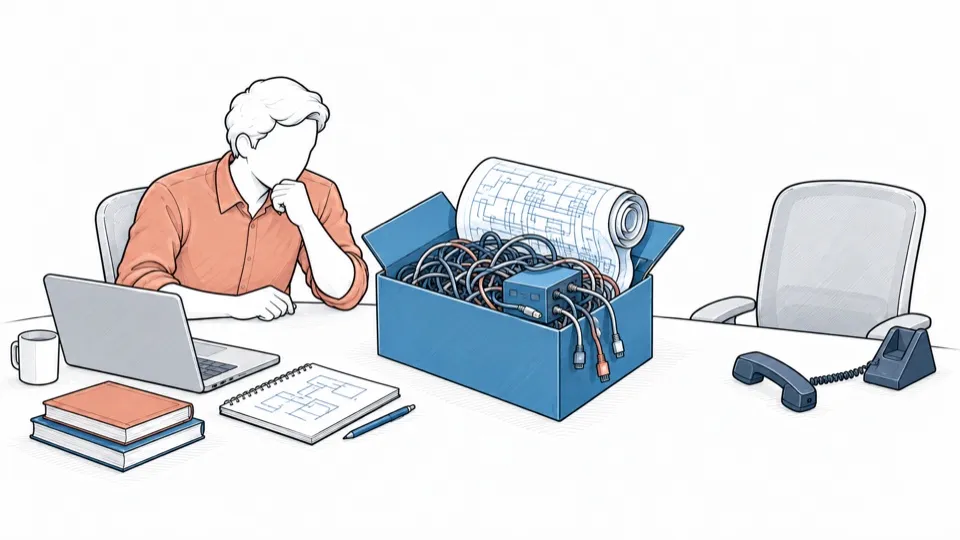
A puzzled person in front of a box of tangled cables and plans: they received the code without the means to take it over.
Receiving the code is not enough to know how to take it over.

Sovereign

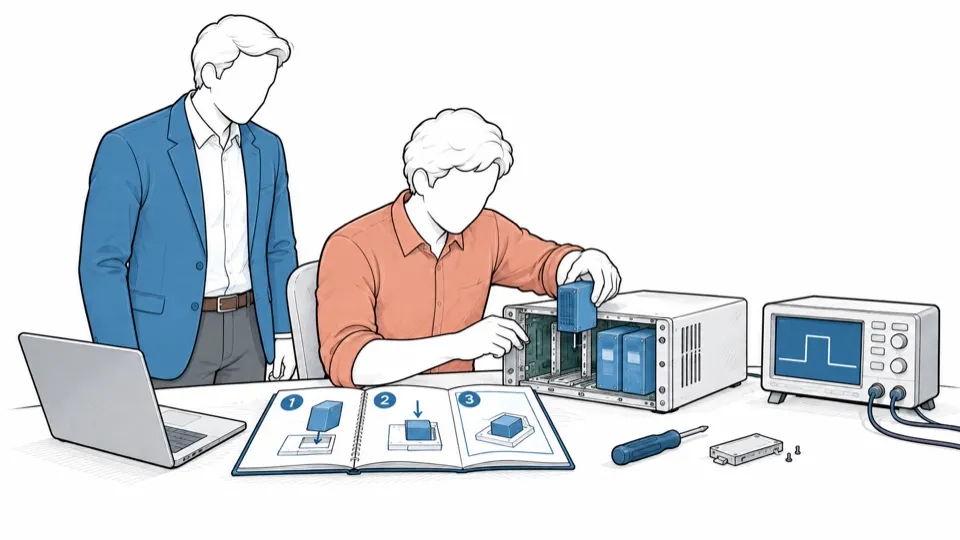
A person works on the machine themselves, documentation open, watched by a colleague.
The handover shows when your team knows how to act.

Adoption

You choose who carries the adoption.

Not sovereign

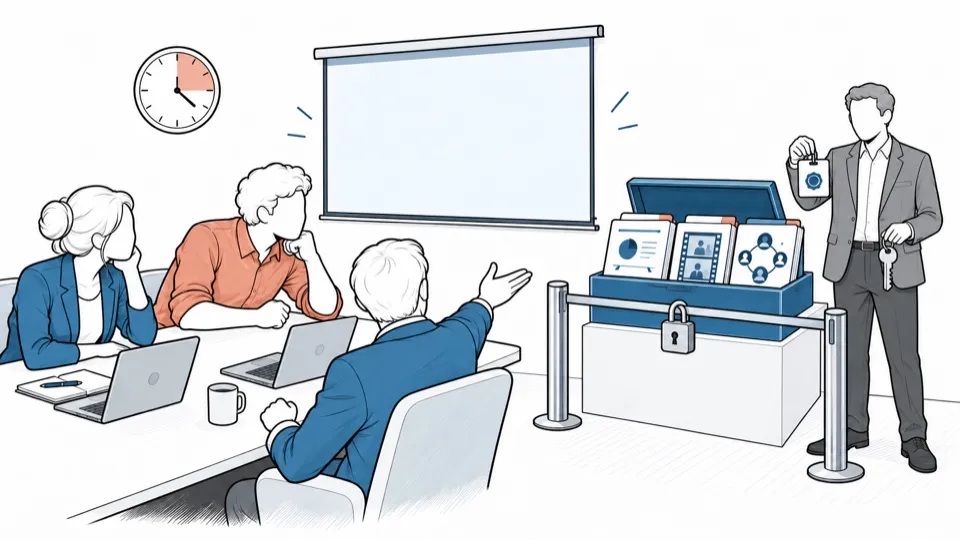
A team waits in front of a blank screen; the materials stay padlocked, guarded by someone behind a rope.
Adoption depends on a mandatory checkpoint.

Sovereign

A team runs the adoption itself: the materials lie open on the table and the board shows the journey.
Your teams and your partners can carry the adoption.

At every scale

The same test holds from a person to a nation: who decides, and can one leave without collapsing?

A person keeps their data, their skills and their ability to change tools. A team keeps its budget, its time and its priorities, and works with the others without being absorbed.

An application too: its service contract is its sovereignty charter — what it may call, who may call it, nothing open-bar. A company keeps its code, its infrastructure and its skills; an industry, its standards; a nation, its jurisdiction and its frameworks.

Deciding at the lowest capable level, and staying reversible: subsidiarity, applied to software.

What sovereignty does not promise

Every freedom announced has its limit; here they are.

  • No absolute independence: operating system, hardware, protocols and third-party components remain dependencies, to inventory and to make replaceable as far as it makes sense.
  • Taking over has a cost: hosting, integrating and evolving take time and skills, which Contee passes on.
  • Durable rights and the freedom to choose one's service provider are intentions being drafted into contracts: only the signed contract commits to them.
  • White label does not erase the licence notices of third-party components: they remain due.
  • These freedoms are proven product by product: each one's coverage is published with its demonstration.

Software you want to be able to leave, or a dependency you want to measure? Let's talk.